
 Car or four-wheeler insurance is a legal agreement between an insurance provider and a policyholder. It is a type of motor insurance designed to offer financial protection for your vehicle in case of damage, theft, or the need for repairs following an accident. Additionally, car insurance covers financial and legal liabilities if your vehicle is involved in an accident that causes damage to a third party, their property, or their vehicle. There are three main types of car insurance: Standalone Own Damage (SAOD), Third-Party Liability, and Comprehensive Coverage. According to the Motor Vehicle Act of 1988, it is mandatory for all car owners in India to have at least third-party insurance.
This is the most basic and legally mandated form of car insurance. It covers damages caused by your vehicle to another person, their property, or vehicle. However, it does not provide any financial protection for damages to your own car. Third-party insurance is compulsory in many countries, including India, as per the Motor Vehicle Act. While it is affordable, its coverage is limited to external liabilities.
Comprehensive insurance combines the benefits of third-party liability and own damage coverage into a single policy. It provides extensive protection, including theft, accidents, and damages from natural or man-made calamities, while also covering third-party liabilities. Additionally, you can enhance this policy with optional add-ons like zero depreciation, engine protection, and roadside assistance, making it the most complete and versatile coverage option.
Standalone Own Damage insurance offers coverage exclusively for your vehicle. It protects against damages caused by accidents, theft, fire, natural disasters like floods, or man-made events like vandalism. However, it does not include third-party liability, so you would need to purchase third-party insurance separately. This option is suitable for those seeking focused protection for their car.
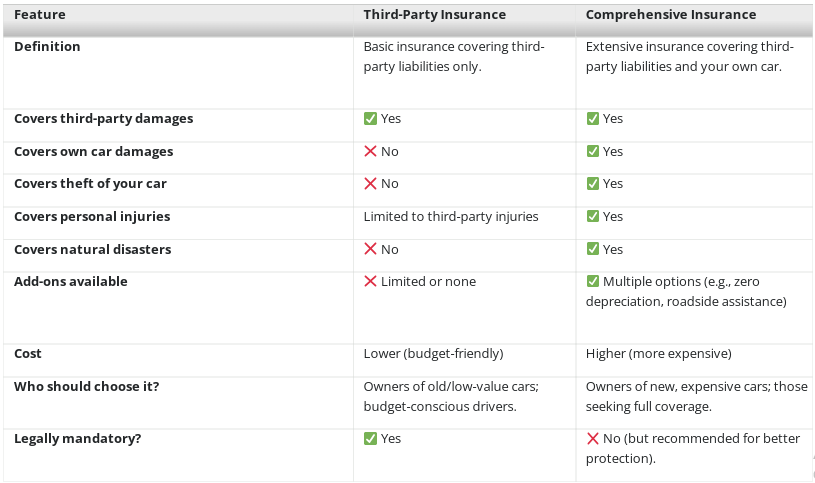
 Multiple options (e.g., zero depreciation, roadside assistance)